How to Sell Your Trading Cards (and Get a Fair Price)
Last updated: · 8 min read
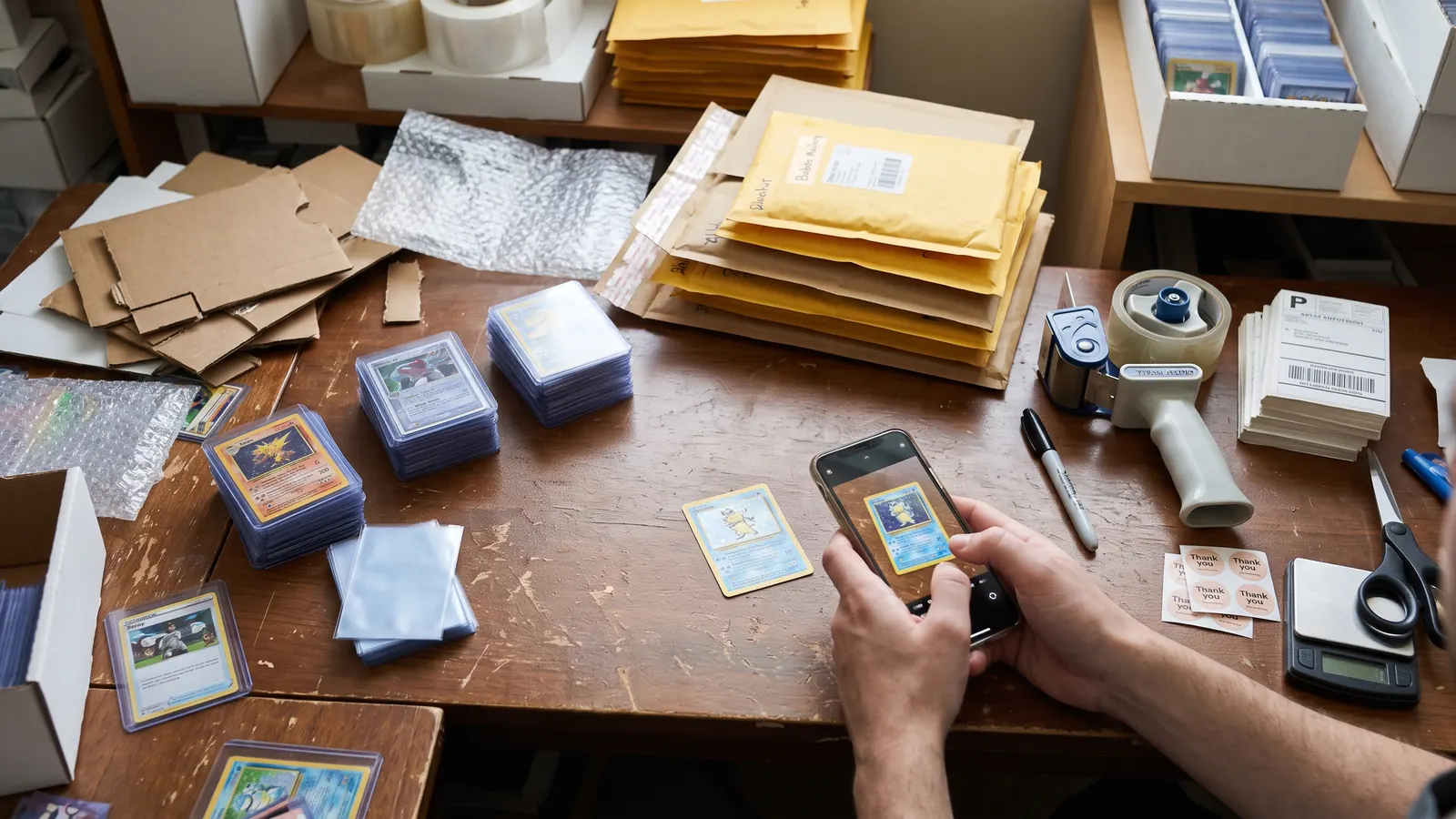
Selling cards well comes down to three things: knowing what each card is actually worth, choosing the right place to sell it, and avoiding the mistakes that cost you money or get you scammed. This guide covers all three, whether you're clearing out a binder of duplicates or selling a single card worth hundreds.
Step 1: Sort before you price
Most collections are a mix of a few valuable cards and a lot of cards worth very little. Sorting first saves hours:
- Pull out anything that looks special: holos, foils, full arts, alternate arts, secret rares, old cards, promos, graded cards.
- Group the rest by set so you can look them up quickly.
- Keep bulk separate. Commons and uncommons in most modern sets sell for cents each and are usually best sold as a lot, not one by one.
The fastest way to price a stack is to scan it with the TCG Scanner app, or search each card on MyTCGValue. Make sure you match the exact printing: holo, reverse holo, first edition and alternate art versions of the same card can be worth very different amounts.
Step 2: Work out what each card is really worth
The market price on a card page is your starting point, not your final number. Adjust for:
- Condition. Market prices describe cards in good, near-mint-ish condition. Visible wear (whitening on edges, scratches, creases) brings the price down, sometimes a lot. Our condition guide explains how to judge it honestly.
- Where you're selling. Prices differ between marketplaces and countries. A US market price isn't automatically what a card sells for in Europe or Japan.
- Recent trend. If a card's price has been rising or falling, the price chart on its card page shows it. Price a card near the recent market, not at a spike.
- Graded or raw. Graded cards are a separate market. Check recent sales of that exact grade from that exact grading company.
For anything worth more than a few dollars, also check recent sold listings (not asking prices) on the marketplace you plan to use.
Step 3: Choose where to sell
Each option trades money for convenience. Roughly from most money to least effort:
Selling directly to collectors online
TCGplayer (US) and Cardmarket (Europe) are marketplaces built for trading cards. Buyers search by exact card and printing, so well-described singles sell steadily. You'll pay marketplace and payment fees, and you handle shipping.
eBay reaches the most buyers worldwide and suits higher-value singles, graded cards and lots. Good photos and accurate titles matter more here because buyers browse rather than search a catalogue. Fees apply here too.
Local and online communities (Facebook groups, Discord servers, Reddit trading communities) can mean lower fees, but come with more scam risk and less buyer protection. Follow each community's rules and use protected payment methods.
Selling to a shop
Card shops will buy your cards on the spot, which is quick and safe. The trade-off is price: a shop has to resell your card, so its buylist price is usually well below market price. Many shops offer more in store credit than in cash. This is often the best route for bulk and for cards you want gone today.
Selling at events
Conventions and tournaments have vendors buying cards. Prices are similar to shops, but you can compare offers from several vendors in one place.
Where to sell Pokémon cards
Pokémon cards have the biggest market of any trading card game, so you have more options:
- TCGplayer (US): the biggest marketplace for single cards. You list cards against TCGplayer's own catalogue, which makes listing quick, and buyers come to you. Best for cards worth a few dollars up to a few hundred.
- eBay: the largest audience worldwide, and the best place for graded cards, vintage cards and high-value singles, where photos of the actual card matter.
- Cardmarket (Europe): the main marketplace for European sellers.
- Local game stores: the fastest way to sell, especially bulk, but stores pay buylist prices, typically well below market price, because they need to resell at a profit.
- Card shows and conventions: good for selling valuable cards in person, and for comparing offers from several dealers.
- Facebook groups, Discord servers and Reddit's trading communities: lower fees, but less buyer protection; use payment methods that protect both sides and check the other person's history.
Bulk commons and uncommons sell best as lots by the thousand. Check what any card is worth first with the Pokémon card value checker.
Step 4: Price it to sell
- Know your floor. Decide the lowest price you'll accept before you list, after fees and shipping.
- Undercut slightly for speed. Pricing just under similar listings in the same condition usually sells faster than matching them.
- Leave room to negotiate where offers are common, such as eBay "best offer" or local sales.
- Bundle low-value cards. Selling a $0.25 card on its own often costs more in time and postage than it earns. Sell bulk in lots, or by weight or count to shops.
Step 5: Photograph and describe honestly
For online sales, especially on eBay and in communities:
- Photograph the actual card, front and back, in bright, even light without glare. Never use stock images for anything valuable.
- Show any flaws up close. Buyers trust sellers who point out wear, and honest descriptions prevent returns and disputes.
- Include the exact details: card name, set, card number, printing (holo, reverse holo, first edition), language and condition.
- For graded cards, show both sides of the slab and include the certificate number so buyers can check it.
Step 6: Ship it safely
Damage in the post is the most common avoidable problem. A standard approach for single cards:
- Put the card in a soft penny sleeve.
- Slide it into a rigid top-loader (or a semi-rigid card saver for graded submissions).
- Seal the top with a small piece of tape or a team bag so the card can't slide out.
- Sandwich it between pieces of cardboard, or use a rigid mailer.
- For anything valuable, use a tracked service, and consider insurance and signature on delivery.
Never ship a card loose in an envelope, and never use sticky tape directly on the card or its sleeve opening in a way that could stick to the card when it's pulled out.
Step 7: Avoid the common scams
Most scams target sellers who move outside a marketplace's protections:
- "Pay you outside the platform." Buyers asking to pay by an unprotected method, or to complete a marketplace sale off-platform, are a red flag.
- Fake payment notifications. Always check that money has actually arrived in your account before you ship, not just that you received an email saying so.
- Address changes after payment. Ship only to the address on the order. Requests to send elsewhere are a common way to claim "item not received".
- Overpayment and refund requests. A buyer who "accidentally" pays too much and asks for the difference back is almost always running a scam.
- Swap returns. For valuable cards, record identifying details (certificate numbers, photos of small flaws) so you can recognise your card if a different one comes back as a return.
When a deal feels rushed or unusual, slow down. A genuine buyer will wait.
Fees, taxes and records
Marketplace fees, payment fees and postage all come out of the sale price, so work out what you'll actually receive before you list. Depending on where you live and how much you sell, card sales may also be taxable income. Keep simple records of what you sold, for how much, and what you paid for it, and check the rules in your country.
Selling a whole collection
If you're selling an entire collection rather than a few cards, the best approach is usually a mix:
- Sell the top cards individually. In most collections, a small number of cards make up most of the value. Pull those out and sell them one by one, where careful pricing and good photos pay off.
- Sell the middle tier in small lots, grouped by set, character or theme. Lots save time and postage, and buyers like them.
- Sell the bulk to a shop or as a single large lot. It won't fetch much per card, but it clears space fast and saves hours of listing.
Before you start, scan or search everything once so you know the total market value. That number helps you judge any offer for the whole collection: a shop or buyer offering to take everything at once will pay well below it, and you can decide whether the convenience is worth the difference.
Selling graded cards
Graded cards sell differently from raw cards:
- Price by grade and company. A PSA 10, a BGS 9.5 and a CGC 10 of the same card can sell for different amounts. Look up recent sold listings for that exact combination.
- Show the certificate number in your listing so buyers can verify it on the grading company's website.
- Photograph the slab front and back, with the label clearly readable and without glare.
- Ship slabs well protected: bubble wrap or a fitted slab sleeve inside a sturdy box, never a padded envelope.
Frequently asked questions
Should I sell to a shop or online?
Online usually pays more; a shop is faster and safer. Many sellers do both: valuable cards online, everything else to a shop.
Is it worth selling cards worth under a dollar?
Individually, rarely. Bundle them into lots, or sell them as bulk.
Should I grade before selling?
Only if the card is valuable enough and in good enough condition that the graded price, minus fees, beats the raw price. Our grading calculator works this out for you.
Quick checklist
| Step | Do this |
|---|---|
| Sort | Separate valuable cards from bulk |
| Price | Match the exact printing; adjust for condition and market |
| Choose | Marketplace for top price, shop for speed |
| List | Real photos, honest condition, full details |
| Ship | Sleeve, top-loader, rigid mailer, tracking for valuable cards |
| Stay safe | Protected payments only; ship only to the order address |
Before you list anything, check its current market price and price trend on MyTCGValue. If you're unsure whether a card is genuine, read how to spot fake cards first: selling a fake by mistake can cost you far more than the card is worth.
Check a card's price now
Scan any card with the TCG Scanner app, or search 270,000 cards on this site. Free, no sign-up.