How to Tell if a Pokémon Card Is Fake: 9-Point Checklist
Last updated: · 3 min read
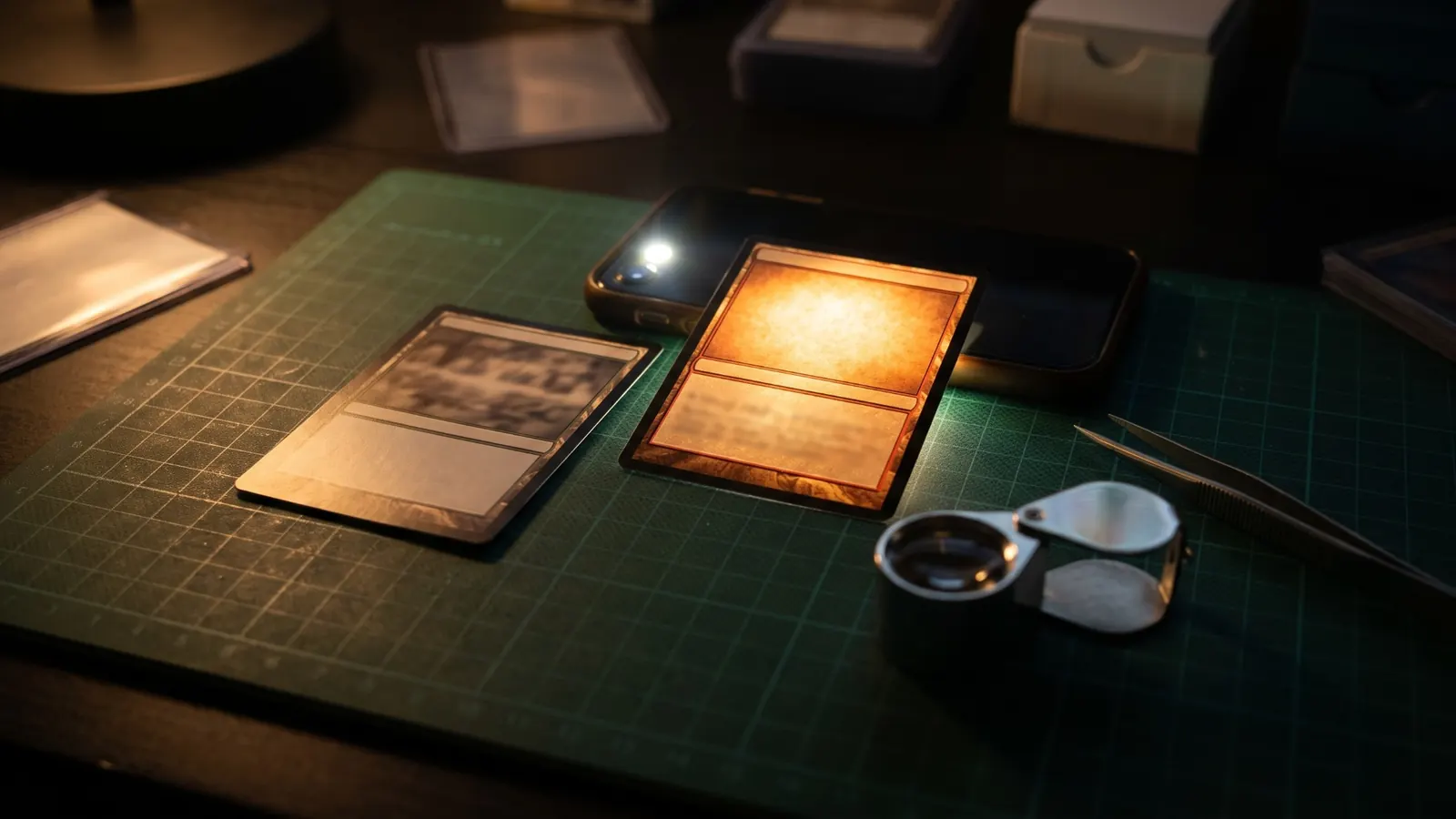
Short answer: most fake Pokémon cards give themselves away in under a minute. Check the text for typos and a missing "é" in "Pokémon", compare the blue back with a real card, look at the energy symbols, font and holo pattern, and feel the card stock. For expensive cards, add the light test and a close look with a loupe. And if the price is far below the card's market price, assume it's fake until proven otherwise.
The quick checklist
| Check | Real card | Common fake |
|---|---|---|
| Spelling | "Pokémon" with the é, no typos | Missing é, typos in attacks or text |
| Card back | Deep blue, crisp swirl, sharp Poké Ball | Too light, purple or blurry; wrong shades |
| Energy symbols | Correct shape, size and colour | Wrong size, off-centre, odd colours |
| Font | Consistent weight and spacing | Too bold, too thin, wrong spacing |
| HP and damage | Match the official card | Absurd numbers, wrong layout |
| Card number | Matches the set (e.g. 199/165) | Number or set symbol that doesn't exist |
| Holo | Pattern matches the set and era | Rainbow foil over the whole card |
| Texture | Modern full arts and special rares feel textured | Smooth and glossy |
| Card stock | Firm, with a dark core layer | Thin, flimsy or plasticky |
Step by step
1. Read the card
Fakes are often made with machine translation and careless proofreading. Read the name, attacks, ability and flavour text slowly. Look for the accented "é", correct capitalisation, and attack damage and HP that make sense for the card.
2. Compare the back
The back of a real Pokémon card is printed the same way on millions of cards, which makes it the easiest thing to compare. Put the suspect card next to a cheap genuine card from your collection: fakes are often a lighter or more purple blue, with a blurry swirl or Poké Ball.
3. Check the number and set symbol
Every real card has a set symbol and a number such as 4/102 or 199/165. Look the card up on MyTCGValue: if no card with that name, number and set exists, or the artwork doesn't match the official image, it's fake.
4. Look at the holo and texture
Real holos have a pattern specific to the set and era, and usually only cover part of the card. Modern ultra rares (full arts, illustration rares, special illustration rares, gold cards) have a fine texture you can feel. Fakes tend to have a generic rainbow shine and a smooth surface.
5. Test the card stock
Genuine cards have a dark layer inside the card stock. Shine a phone torch through the card next to a real one: many fakes let through much more light. Flexing gently next to a real card also helps, since fakes are often too floppy or too stiff.
Fake graded slabs and sealed products
Look up the certificate number of any graded card on the grading company's website and check that the card, grade and photos match. For sealed booster boxes and Elite Trainer Boxes, check the shrink wrap: genuine Pokémon boxes use branded wrap with Poké Ball logos.
If you bought a fake
Contact the seller and the marketplace straight away, with clear photos. Most marketplaces' buyer protection covers counterfeits if you report them in time.
For checks that work across Magic, Yu-Gi-Oh! and other games, see our general guide to spotting fake cards.
Frequently asked questions
How can you tell if a Pokémon card is fake?
Check for typos and a missing é in Pokémon, compare the blue back with a real card, check the energy symbols, font, card number and holo pattern, and feel the card stock. Most fakes fail several of these checks.
Do fake Pokémon cards have the é?
Many don't. Genuine English cards always spell Pokémon with an accented é, so a plain e is a strong sign of a fake, though some better fakes do include it.
What is the light test for Pokémon cards?
Shine a phone torch through the card in a dark room next to a real card. Genuine cards have a dark core layer and let little light through; many fakes glow much brighter.
Check a card's price now
Scan any card with the TCG Scanner app, or search 270,000 cards on this site. Free, no sign-up.