Are Yugioh Cards Worth Anything? What Sells and for How Much
Last updated: · 8 min read
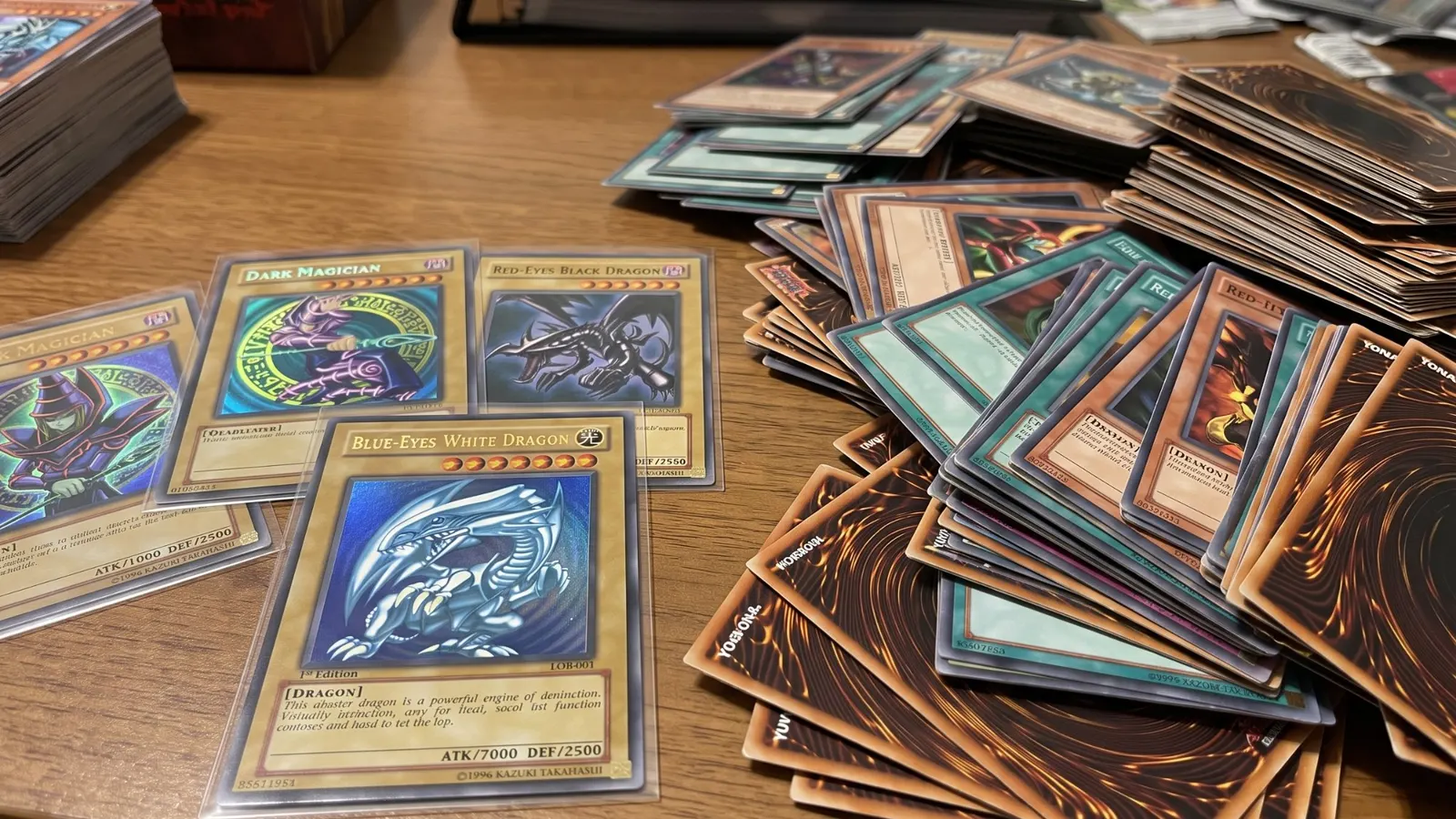
Are yugioh cards worth anything? Yes, but most of them are worth very little, and a small number are worth a lot. A common from an old pack usually sells for under a dollar, while the right printing of a classic or tournament card can sell for hundreds or even thousands of dollars.
If you've found a binder of Yu-Gi-Oh! cards in a closet, or you're about to sell a box of them, this guide shows which cards are worth money, why some copies of the same card are worth far more than others, and how to check the price of any card for free. All prices below are US market estimates from TCGplayer sales, as of Oct 26, 2026, taken from the live pages on MyTCGValue.
Are Yugioh Cards Worth Anything? The Short Answer
Most Yu-Gi-Oh! cards are worth cents. Konami has printed huge numbers of cards since the English game launched in 2002, and most of them are commons that nobody needs.
You can see this in the very first English set, The Legend of Blue Eyes White Dragon, released on Mar 8, 2002. Its commons sell for very little:
Hitotsu-Me Giant (LOB-002): about $0.24
Mammoth Graveyard (LOB-009): about $0.22
Basic Insect (LOB-008): about $0.25
But the same set also has cards that are worth real money:
Blue-Eyes White Dragon (LOB-001): about $125.94 (Unlimited)
Exodia the Forbidden One (LOB-124): about $61.30 (Unlimited)
Red-Eyes B. Dragon (LOB-070): about $47.89
Dark Magician (LOB-005): about $42.07
So the honest answer is: a random stack of cards is usually worth a few dollars, but one or two good cards in that stack can be worth more than everything else put together. That's why it pays to check before you sell.
What Makes a Yu-Gi-Oh! Card Worth Money?
The card's name is only the start. Two cards with the same name and picture can have very different prices. These are the things that decide what a Yu-Gi-Oh! card is worth.
The Exact Printing (Set Code)
Every card has a set code printed under the right side of its picture, such as LOB-001 or SKE-001. The code tells you which set the card came from, and that changes the price a lot.
Blue-Eyes White Dragon is a good example. The LOB-001 copy is about $125.94 (Unlimited), but the Blue-Eyes White Dragon from Starter Deck: Kaiba Evolution (SKE-001) is about $2.80 (Unlimited). Same dragon, very different value. Always look up the set code, not just the name.
1st Edition or Unlimited
Most Yu-Gi-Oh! sets are first printed as 1st Edition, and later print runs are Unlimited. On English cards the words "1st Edition" are printed on the card, and Konami says the small security foil in the bottom-right corner is gold on 1st Edition and Limited Edition cards and silver on Unlimited cards.
1st Edition copies usually sell for more. On MyTCGValue, Exodia the Forbidden One from LOB is about $61.30 as Unlimited and about $675.00 as 1st Edition. Our guide on how to tell if a card is first edition shows where to look.
Rarity
Yu-Gi-Oh! has many rarities, from Common up to special foils like Ultimate Rare, Ghost Rare, Starlight Rare and Quarter Century Secret Rare. The rarer and shinier the foil, the fewer copies exist, and the higher the price usually is.
Ultimate Rares are a good example. They have an embossed (raised) foil on the picture, and on the market they are often worth much more than other rarities of the same card. Uria, Lord of Searing Flames as an Ultimate Rare from Shadow of Infinity (SOI-EN001) is about $999.97 (1st Edition).
Not sure what rarity your card is? Our Yu-Gi-Oh! rarity guide explains how to tell each one apart.
Tournament Prizes and Promos
Cards that were never sold in normal packs are often the most valuable. Tournament Packs were handed to players at official events, and Champion Packs were made for hobby and tournament stores. Because fewer were made, some of these cards are now worth a lot:
Mechanicalchaser (TP1-001), from Tournament Pack: 1st Season: about $899.99
Book of Moon (CP01-EN002), from Champion Pack: Game One: about $733.33
Promo cards that came with video games count too. The Blue-Eyes White Dragon that came with the Game Boy Color game Yu-Gi-Oh! Dark Duel Stories (DDS-001) is about $1,450.56.
Condition
Condition can cut a card's value in half or worse. Scratches, bent corners, white edges and creases all lower the price. A Near Mint card is worth the most, and a played or damaged copy sells for much less. Check your card against our card condition guide before you set a price.
Demand From Players and Collectors
Some cards are valuable because players need them for strong decks, and others because collectors love them. Classic monsters like Blue-Eyes White Dragon, Dark Magician and Exodia stay popular for years. Cards that are popular in tournaments can rise fast, and they can also drop when Konami reprints them or bans them.
The Most Valuable Yu-Gi-Oh! Cards Right Now
Here are the 10 most expensive Yu-Gi-Oh! cards on MyTCGValue, as of Oct 26, 2026. These are ungraded market prices.
Winged Kuriboh Sabatiel LV10 (GMR), Magnificent Monsters, MAMO-EN006: $5,000.00
Black Rose Dragon (Ghost Rare), Crossroads of Chaos, CSOC-EN039: $1,499.09
Blue-Eyes White Dragon (Dark Duel Stories), DDS-001: $1,450.56
Stardust Dragon (Ghost), The Duelist Genesis, TDGS-EN040: $1,212.50
Dragon Master Magia (Starlight Rare), Battles of Legend: Glorious Gallery, BLGG-EN137: $1,163.80
Dark Magician, the Pharaoh's Servant (Starlight Rare, Extended Art), Magnificent Monsters, MAMO-EN001: $1,158.97
Uria, Lord of Searing Flames (Ultimate Rare), Shadow of Infinity, SOI-EN001: $999.97
Caius the Shadow Monarch (Ultimate Rare), Turbo Pack: Booster Three, TU03-EN000: $933.78
Mechanicalchaser, Tournament Pack 1, TP1-001: $899.99
Dark Magical Curtain (Starlight Rare, Extended Art), Magnificent Monsters, MAMO-EN003: $886.58
Notice the pattern: almost every card on the list is a special foil (Ghost, Starlight or Ultimate Rare), a tournament prize, or a promo. Prices change every night, so see the full top 100 on our most valuable Yu-Gi-Oh! cards page.
Are Old Yu-Gi-Oh! Cards Worth Anything?
Old cards are not automatically valuable. A 2002 common is still a common, and most sell for under a dollar. What makes an old card worth money is the same list as above: the right set, 1st Edition, a rare foil and good condition.
Old cards worth checking first:
Ultra Rares from the first sets, like Blue-Eyes White Dragon, Dark Magician, Red-Eyes B. Dragon and the five Exodia pieces from LOB
Anything with "1st Edition" printed on it from the early sets
Ultimate Rares from the mid-2000s, like the Sacred Beasts (Uria, Hamon and Raviel) from Shadow of Infinity
Tournament Pack and Champion Pack cards, which often have TP or CP in the set code
Video game promos with the DDS set code
Be careful with reprints. Konami has reprinted many classic cards, and newer copies are usually worth less. For example, The Legend of Blue Eyes White Dragon was later reissued in an edition with the code LOB-EN, and those cards are priced separately from the 2002 LOB copies. The LOB-EN Blue-Eyes White Dragon is about $60.00, less than half the 2002 LOB-001 copy. You can browse every set and edition on MyTCGValue, with each printing priced on its own page.
Which Yu-Gi-Oh! Cards Are Usually Not Worth Much?
To save you time, here's what usually isn't worth checking one by one:
Commons and plain Rares with no foil on the picture
Cards from starter decks and structure decks that were printed in huge numbers
Recent reprints of famous cards
Damaged cards with creases, water damage or writing on them
Cards marked "proxy" or "custom", which are not official cards
These cards are often sold together in bulk lots. Pull out your foils, your 1st Editions and your tournament cards first, then sell the rest as a group.
How to Check What Your Yu-Gi-Oh! Cards Are Worth
Here's a simple way to find out what your cards are worth in a few minutes:
Sort your cards. Put foil cards (shiny name or shiny picture) in one pile and non-foil cards in another. Start with the foil pile.
Find the set code. It's under the right side of the card's picture, for example LOB-001.
Check the edition. Look for "1st Edition" on the card.
Look up the price. Type the card name or set code into the free Yu-Gi-Oh! card value checker, or scan the card with the free TCG Scanner app, which works for Yu-Gi-Oh! cards too.
Compare the right printing. On each card page, check the price for your exact printing (1st Edition or Unlimited) and your card's condition.
If a valuable card looks wrong (blurry text, odd colors or thin card stock), check it carefully before you buy or sell it, because famous cards are often faked.
Should You Grade or Sell Your Valuable Cards?
If you find a card worth a lot of money and it's in great shape, grading (sending it to a company like PSA, BGS or CGC to check and seal it) can raise its value. But grading costs money and takes time, so it only makes sense for cards that are valuable and in top condition. Use the free should I grade it tool to see if grading is likely to pay for itself.
When you're ready to sell, read our guide on how to sell your cards to compare selling online, to a local store or in bulk.
Frequently Asked Questions
Are yugioh cards worth anything in 2026?
Yes. Most cards are worth cents, but rare foils, 1st Edition cards from early sets, tournament prizes and promos can be worth hundreds or thousands of dollars. On Oct 26, 2026, the most valuable Yu-Gi-Oh! card on MyTCGValue was Winged Kuriboh Sabatiel LV10 (GMR) at about $5,000.00.
What is the most expensive Yu-Gi-Oh! card?
On MyTCGValue's list of normal market sales, the top card as of Oct 26, 2026 is Winged Kuriboh Sabatiel LV10 (GMR) from Magnificent Monsters at about $5,000.00. One-of-a-kind prize cards that rarely sell, and top graded copies, can go for much more at auction.
How do I know if my Yu-Gi-Oh! card is rare?
Look at the card name and picture. A plain black or white name with no foil usually means Common. A silver name means Rare. Shiny pictures, gold or rainbow names and raised foil mean higher rarities. Our Yu-Gi-Oh! rarity guide has the full list.
Are 1st Edition Yu-Gi-Oh! cards worth more?
Usually, yes. 1st Edition copies come from the first print run, and they normally sell for more than Unlimited copies of the same card and rarity. Exodia the Forbidden One from LOB is about $675.00 as 1st Edition and about $61.30 as Unlimited on MyTCGValue.
Is a Blue-Eyes White Dragon worth money?
It depends on the printing. The 2002 LOB-001 Blue-Eyes White Dragon is about $125.94 (Unlimited), the Dark Duel Stories promo DDS-001 is about $1,450.56, and the Starter Deck: Kaiba Evolution copy SKE-001 is about $2.80 (Unlimited). Check your set code to know which one you have.
Where can I check Yu-Gi-Oh! card prices for free?
Use the free Yu-Gi-Oh! card value checker on MyTCGValue, which covers 47,702 Yu-Gi-Oh! cards with prices updated every night, or scan your card with the free TCG Scanner app.
Check Your Yu-Gi-Oh! Cards Today
Yu-Gi-Oh! cards can be worth something, but only the right ones. Sort out your foils, find the set code, check for 1st Edition, and look up each card before you sell. It only takes a few minutes, and one good card can be worth more than the whole box. Start with the free Yu-Gi-Oh! card value checker on MyTCGValue.
Check a card's price now
Scan any card with the TCG Scanner app, or search 270,000 cards on this site. Free, no sign-up.